
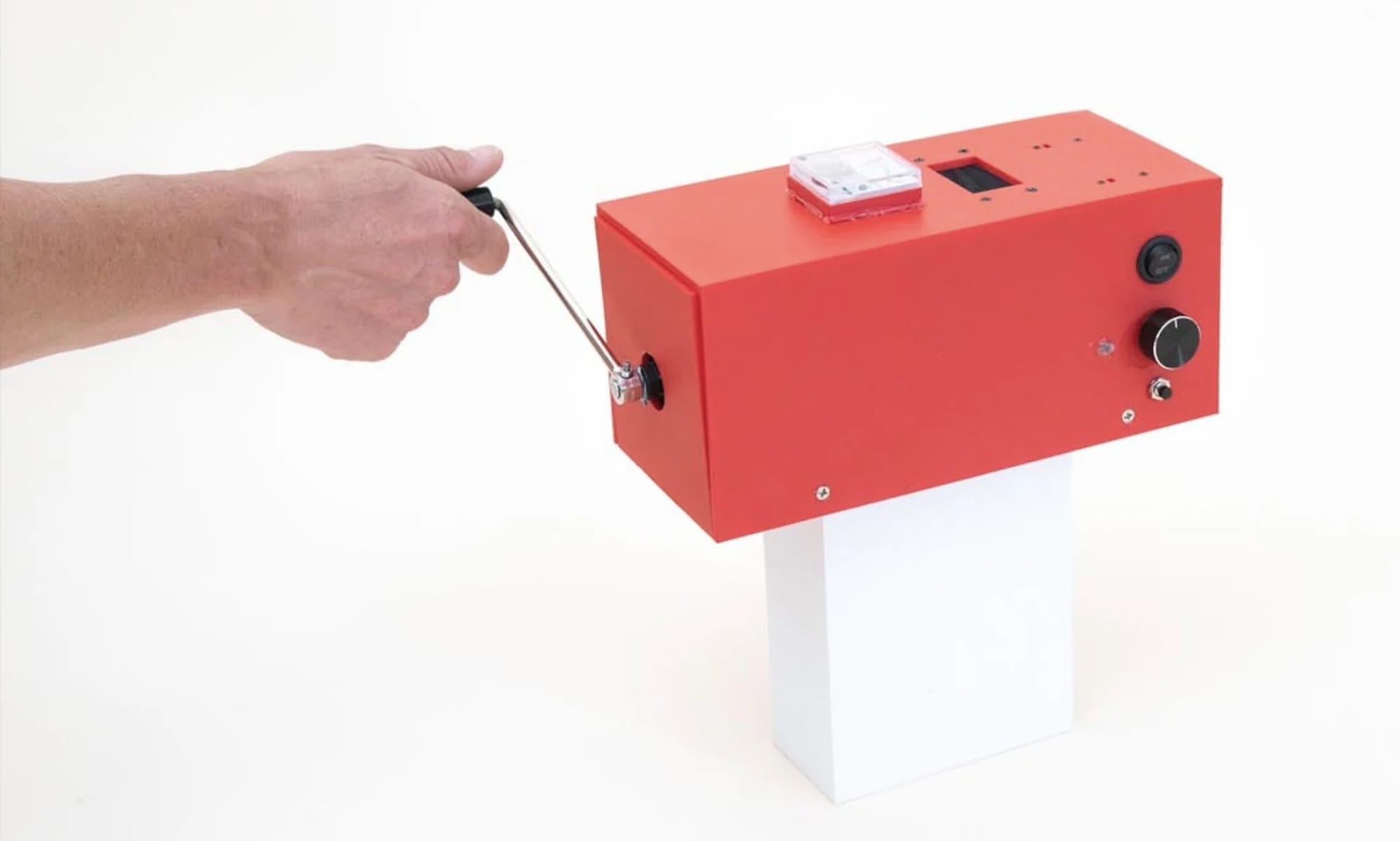
Almost every week another AI company announces a big model, a big data center, and a big electricity bill — while pocketing billions and quietly backtracking on its climate promises. There is a disconcerting background noise. Then comes CrankGPT, a small chatbot that refuses to answer your question unless you generate electricity yourself by turning a hand crank. And honestly, I love it.
What is CrankGPT Actually?
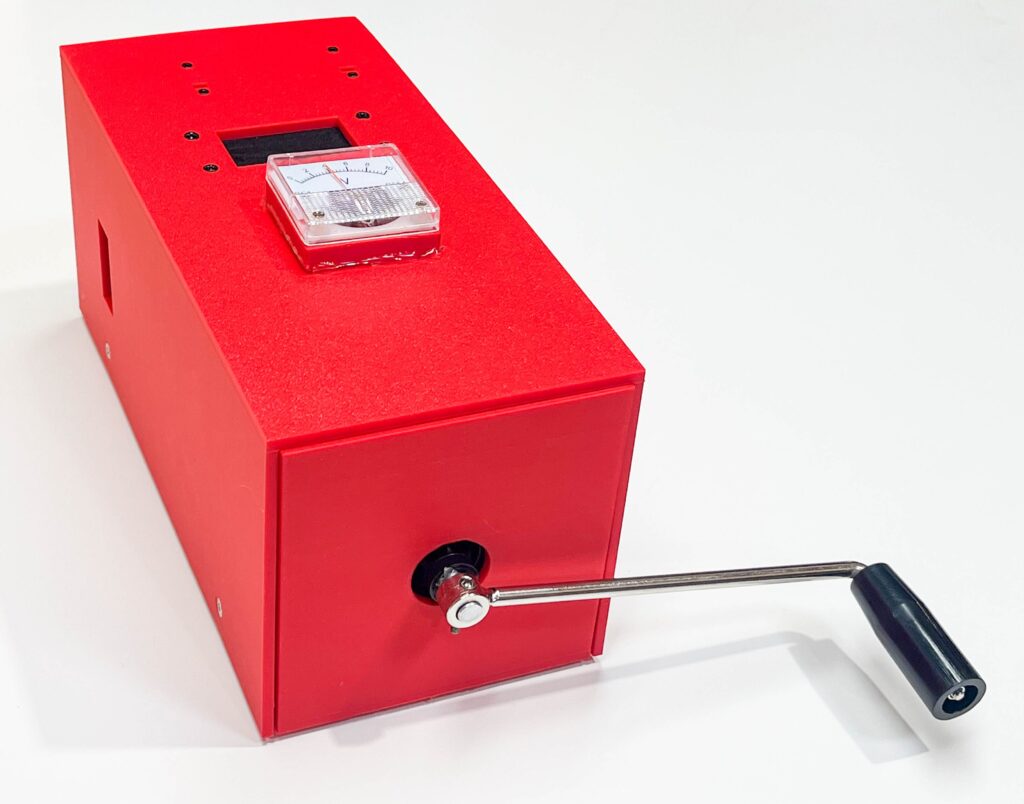
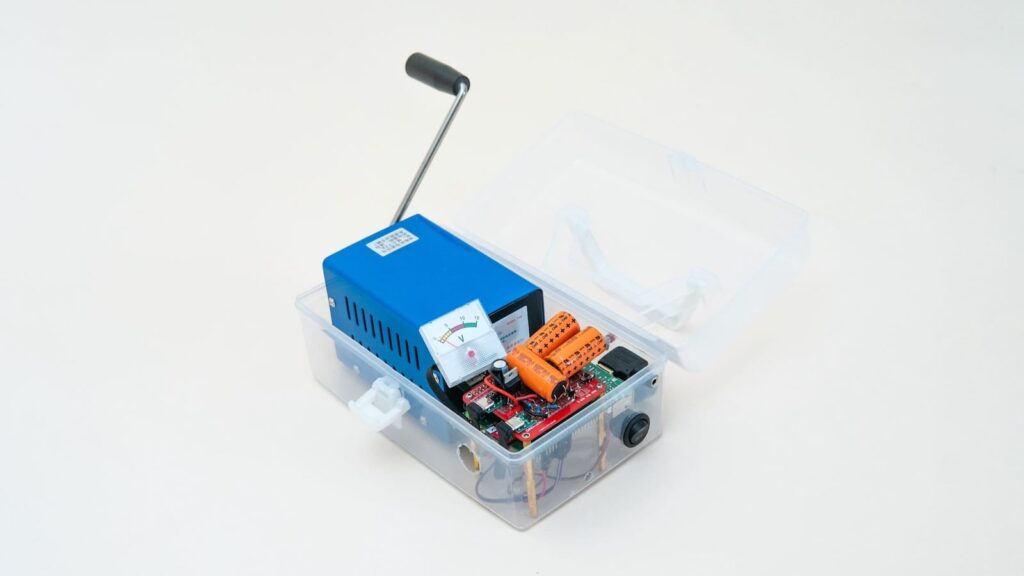
CrankGPT is a project from Squeeze Labs — a fully functional voice assistant on Raspberry Pi 5, powered by a 20W hand-crank generator. No Wi-Fi or cloud. There is no data center. Just your arm, the crank, and the local language model do the guess work on the device.
The technology stack is surprisingly thoughtful for something so small. It uses llama.cpp with integrated models like Liquid AI’s LFM2 350M and Gemma 3 1B, uses Moonshine for speech recognition and Piper for text-to-speech. Everything starts in 30 seconds from a cold start.
Squeeze Labs built a custom capacitor board to smooth out the generator voltages – because when LLM and speech synthesis are blasting together, the crank gets really hard to turn. You feel the burden of inference on your arm.
That last part is the whole point.
Why Disruption Is a Feature
Squeeze Labs does not pretend this works. They make a point: the costs of AI are real, you just don’t see them.
Currently it is not visible at all. You type information, get a response, and somewhere else the server farm draws more power. Global data center electricity consumption reached 460–490 TWh by 2025, up 17% year-on-year. AI infrastructure alone has fueled a 50% increase in energy consumption – five times the average increase in global electricity demand. The IEA projects that number will double by 2030.
Meanwhile, tech companies that once posted ambitious climate promises have quietly begun building gas-fired power plants to power their GPU clusters. The five largest hyperscalers generate an estimated $660-690 billion in capex by 2026, with approximately 75% tied directly to AI infrastructure. That money came from somewhere. Mainly from you, paying for subscriptions and API calls at the edge makes the existing energy costs look small.
CrankGPT makes costs visible again. Looking for an answer? Then you cry, baby.
Broader Shift to Local AI
Created by Squeeze Labs as an annoyance, many people build it seriously. Enterprise AI thinking has changed dramatically, with 55% of targeted enterprise AI now running on premises or at the edge – up from just 12% in 2023. Privacy is a key driver. Running a local model means your data never leaves your device, which is important for healthcare, law enforcement, and anyone who would like their personal questions to stay that way.
The hardware has gotten good enough to make this work. Squeeze Labs notes that small models on modest hardware can handle an incredible array of tasks – and that the industry’s reflex to reach for the biggest, most expensive model is often laziness masquerading as quality.
An Uncomfortable Point
I’m not suggesting you swap out ChatGPT for a hand crank—although that might be fun, for a while. But I think CrankGPT is a real thing. We’ve become so used to “liberating” AI that it’s easy to forget that all information consumes real resources somewhere – electricity, water, land, money. Technology executives reap extraordinary profits while those costs are taken out of the grid, the climate, and everyone else who pays the electricity bill.
A project that makes you feel the cost in your bicep is a more reliable visualization than a clean white text box.
Squeeze Labs doesn’t sell the CrankGPT – it’s an open source build for under $300 in parts. That’s kind of the point too. The answer to AI outsourcing is not AI outsourcing. Sometimes the right move is to do something small.
Lauren has been writing and editing since 2008. She loves working with text and helping writers find their voice. When she is not typing on her computer, she is cooking and traveling with her husband and two children.