
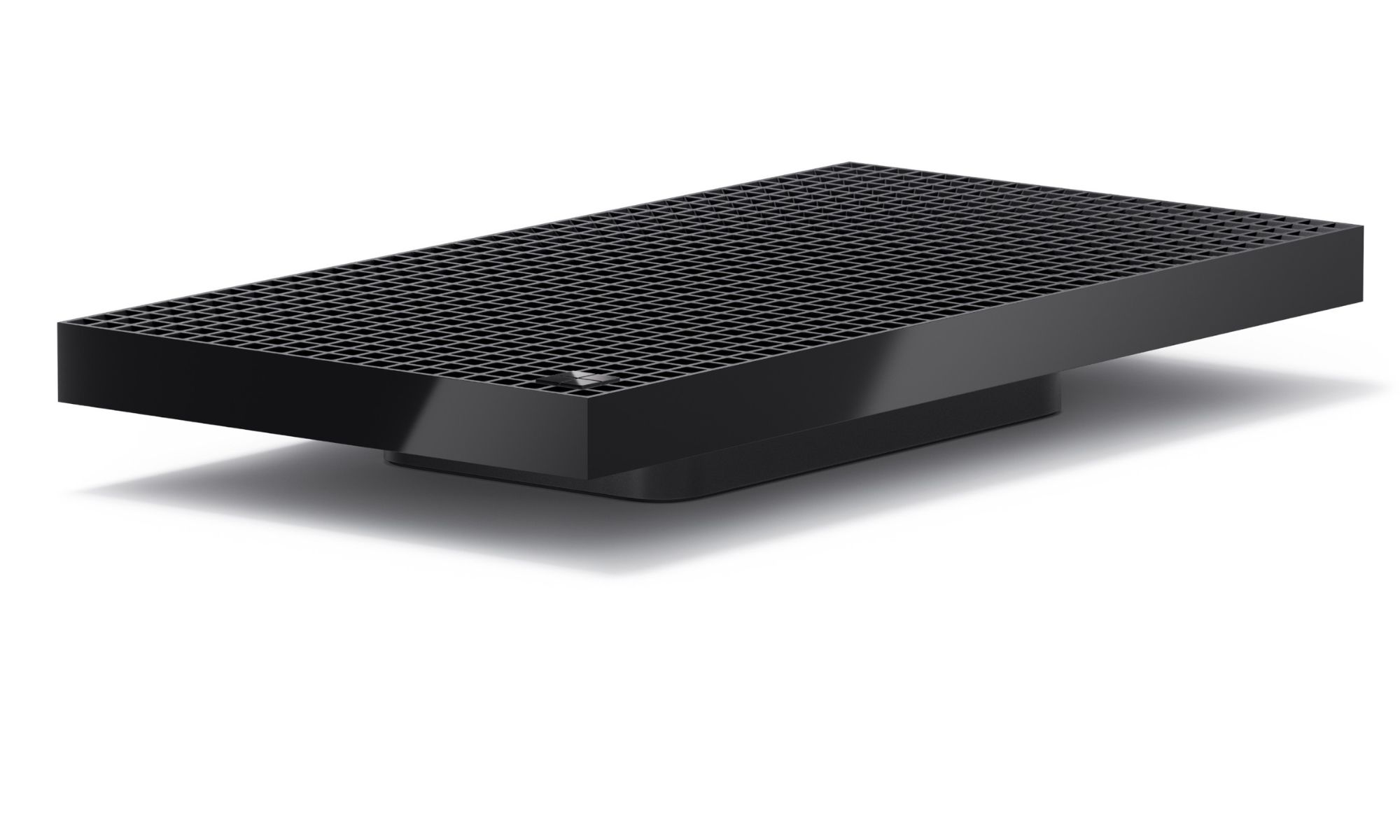
So you are an AI developer. Maybe you spend your days fine-tuning models, putting together agency pipelines, or iterating on information and structures until something clicks. And if you’re like the developers I keep hearing about, there’s a recurring little knot of panic in your stomach every time you flip through a cloud GPU instance—because you know what the invoice will look like at the end of the month.
That’s exactly the person Microsoft seems to have in mind with the Surface RTX Spark Dev Box. It’s not a small general-purpose PC, it’s not a gaming box, and it’s definitely not a machine you buy for your mom to check email. It’s a desktop that puts serious AI computing right next to your keyboard. So let me walk you through whether the Surface RTX Spark Dev Box fits the way AI developers work—where I would pump the brakes.
What AI developers need on a small PC
Developer priorities are staggering compared to almost everyone else who buys a desktop. You don’t care about the featherweight chassis or how good it looks on the back of your monitor. You care about a specific, very different set of things:
Sufficient memory to hold the model: Most local AI work lives or dies on whether the model goes into memory at all. The Dev Box ships with 128 GB of integrated memory, and Microsoft says it’s enough to run 120B-plus parameter models in a single million-token context window. If you’ve ever tried to cram a large model into a machine it wasn’t built for, you already know why 128 GB of integrated memory stands out as an important feature for developers.
Sustainable performance, not just explosive peaks: Training and planning races are marathons, not sprints. A chip that moves after ten minutes is of no use to you. The Dev Box uses a 100 W thermal envelope inside an aluminum chassis designed to double as a heatsink, which is the kind of “keeping the clocks ticking for hours” AI developers are looking for.
Key features of your segment

Memory and calculation
For AI developers, the Surface RTX Spark Dev Box is one of the most interesting local options announced so far, because the 128 GB of integrated memory paired with the NVIDIA RTX Spark superchip (Blackwell RTX GPU and Grace CPU) is designed for the type of work of large models that crowd the standard desktop.
NVIDIA rates the system at up to one petaflop of AI performance, though that figure represents a hypothetical FP4 peak that depends on chip sparsity factors. Treat it as a ceiling, not a guarantee of real-world performance.
Continuous workloads
If your day involves long, well-scheduled runs or complex agent pipelines that bog down the GPU for hours, a heatsink-as-chassis design can provide a worthwhile benefit. AI developers often recognize the benefits of continuous hot performance during increased workloads, even if those benefits don’t appear in the title specification.
A pre-arranged environment that stops fighting you
Microsoft seems to have put some real thought into developer experience. The Dev Box ships with Windows 11 Pro optimized for development from day one, with dark mode enabled, Widgets removed, Do Not Disturb enabled, Developer Mode enabled, and PowerShell 7 set as the default shell.
Under the hood, WSL 2 comes pre-configured with GPU throughput and CUDA support, and VS Code, GitHub Copilot, Git, Python, and Node.js are already included. For an AI developer, that’s an afternoon of setup you don’t have to do. It also connects to the broader Microsoft AI stack—AI Toolkit for VS Code, Windows ML with TensorRT, and Microsoft Foundry for taking a model from local prototype to production.
Local-first means cheaper replication
The cost argument is one that will be most relevant to AI developers looking at their cloud investment. Inference and testing in place lets you put those expensive API model calls to problems that really need them, and manage the day-to-day grind of hardware you already own.
Security, when working with proprietary models
If you’re an AI developer handling sensitive IP or proprietary training data, keeping most of it on a local, secure primary PC (with BitLocker, Microsoft Defender, and Entra ID/Intune for managed fleets) is a legitimate advantage over moving everything to the cloud.
Ports and realities
You get two USB-C ports, USB-A, HDMI, Ethernet, and a headphone jack—a reasonable spread for connecting displays and peripherals without a dongle drawer.
Fair warning: prices and standings are not yet known
The Surface RTX Spark Dev Box is a pre-release product with no published prices, no full spec sheet, and no independent benchmarks yet. It is also subject to FCC approval and will be launched later this year in the US via Microsoft.com.
So, as much as the memory thing makes me enthusiastic, I can’t tell you to buy with confidence until we see what it costs and how it works.
What I’m going to tell you to skip—and the mistakes I see AI developers making
The most common trap I see AI developers fall into is buying frontier-class hardware for very small workloads. Be realistic about your day to day. If you’re using modest models or doing a quick level iteration, a box designed to hold 120B parameter monsters might be too expensive, and you can invest that money elsewhere.
Don’t think that on-premises fully replaces the cloud. The smart play is a hybrid-local mill, cloud boundary problems. That’s a strategy Microsoft is promoting as well.
I also resent the expectations for inclusion. From what I’ve seen, systems in this category don’t always scale to multiple units as seamlessly or efficiently as consumers expect. If you’re considering a multi-system setup for larger jobs, don’t assume that adding a second unit will give you the experience of a single, larger machine.
A quick first tip for AI developers looking at the Surface RTX Spark Dev Box
Since the Surface RTX Spark Dev Box is a US-only, Microsoft.com-exclusive, and still a pre-release product, the smart move is to wait.
Use the next few weeks to profile your actual workloads, including peak memory usage, runtimes, and cloud GPU costs. When pricing and independent benchmarks arrive, you’ll be able to judge whether the system solves a problem in your workflow or adds another expensive piece of hardware to your desk.
Related: COMPUTEX 2026 preview: I’m watching NVIDIA, Apple, and Qualcomm battle it out for your next laptop