
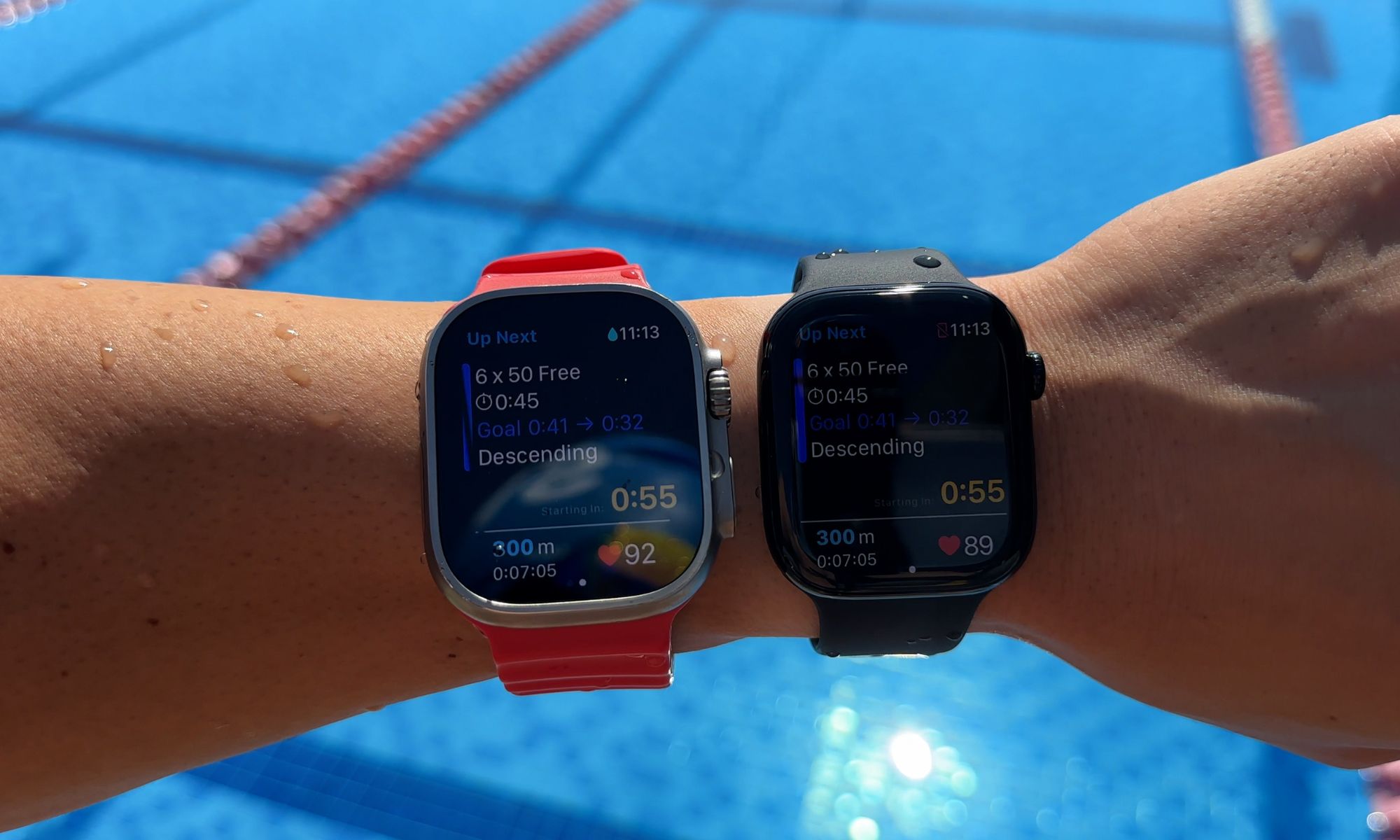
Comparing Apple Watch and Garmin swim tracking often starts with the wrong assumption that one wins. The truth is messier. Both Apple Watch models such as the Apple Watch Ultra 2 and Apple Watch Series 10, as well as Garmin devices such as the fēnix 8 and Forerunner 965, handle swimming at a level that is already more than most people need.
The skepticism is reasonable because the two giants have different visions of swimming. Apple relies on a seamless smartwatch experience that happens to track swimming well. Garmin specializes in structured tracking for sports where swimming sits within a comprehensive endurance system.
The interesting part is that there is no weak approach. The decision is less about skill and more about what kind of swimmer you are when no one labels you as one.
1. Pool lap tracking and swimming flow
Apple Watch Series 10 and Ultra 2 keep track automatically. Turns, stroke changes, and mixed sessions are logged without much user input, perfect for comfortable pool swimming and casual fitness runs.
Garmin watches like the fēnix 8 and Forerunner 965 offer more control through manual lap input and scheduled intervals. That control is helpful during scheduled sets but adds an extra layer of interaction during regular swims or casual runs.
One side likes seamless tracking. Others focus on controlled structure.
2. Open water GPS behavior
Apple Watch Ultra 2 uses dual-frequency GPS and generates clean swimming routes in pools and swimming at the beach. The Series 10 also handles open water well, although there is more variation in distance tracking during rough conditions or mixed strokes.
Garmin fēnix 8 and epix Pro emphasize long-range stability in GPS tracking. Multi-band systems aim to maintain consistent distance readings throughout extended swimming, especially in endurance training areas. The Forerunner 965 is also great for triathlon-style open water use.
Both systems track open water effectively, but they process GPS audio differently—Apple smooths it visually, while Garmin prioritizes data compatibility for planned training.
3. Detection of stroke and mixed periods
Apple Watch models tend to track all the different strokes and heavy sessions. The system adapts well when the swimming style changes within a workout, which helps during mixed or less structured training.
Garmin models work best between consistent freestyle or well-defined sets. Stroke recognition remains strong in tight situations but may require more manual handling when drilling or irregular movements are initiated.
Apple handles diversity flexibly. Garmin responds very well with consistency.
4. Training structure and intervals
Garmin fēnix 8, epix Pro, and Forerunner 965 organize swim data alongside structured training. Intervals, rest timers, and workout planning tools support swimmers who train proactively.
The Apple Watch Series 10 and Ultra 2 provide clear snapshots after swimming and support for structured workouts through apps, but the basic system focuses more on session recording than exercise structure.
Garmin developed a training framework for swimming sessions. Apple is focused on catching the swim itself.
5. Battery life for all swimming use
Apple Watch Series 10 fits short swim routines and frequent charging cycles. Apple Watch Ultra 2 extends use to long open water sessions and multi-sport days.
The Garmin fēnix 8 and epix Pro extend battery life into multi-day training blocks, making them more useful for endurance swimmers or athletes who stack swim, bike, and run sessions throughout the week.
Battery life becomes more important in open water training where long GPS sessions are common.
That’s where the Apple Watch comes in to track swimming

The Apple Watch Series 10 and Ultra 2 are compatible with swimmers who use the pool for general fitness or fitness. Lap tracking remains consistent, stroke visualization handles variation well, and post-swim summaries are easy to interpret.
The Ultra 2 is also suitable for open water swimmers who want reliable GPS tracking in a device that supports everyday smartwatch use. Notifications, health tracking, and general usability sit alongside swimming features without requiring separate devices or systems.
This setup works best when swimming is part of a broader fitness routine rather than a stand-alone workout.
Where Garmin fits well with swimming tracking

Garmin fēnix 8, epix Pro, and Forerunner 965 are compatible with swimmers who treat swimming as structured training. Interval-heavy pool sessions, water endurance swimming, and multi-sport programs benefit from the way Garmin organizes data.
Controlling workouts between sets feels more deliberate, and training metrics carry over into long-term planning. That creates a clearer picture of progress over time, especially for athletes building up to events.
Garmin also supports long uninterrupted training blocks thanks to strong battery performance, which is important for open water swimmers and triathletes.
Final decision
The swim tracking functionality from both Apple Watch and Garmin achieves the same level of accuracy for most users. The difference comes from how each program supports swimming habits.
The Apple Watch Series 10 and Ultra 2 suit swimmers who prioritize pool times, lap tracking, and open water swimming without complex setups. The Garmin fēnix 8, epix Pro, and Forerunner 965 suit swimmers who plan workouts, track intervals closely, and spend more time on long-distance or multi-event training.
Both methods work well. You choose whether swimming fits into your lifestyle, or into your training program.
Which model makes the most sense for different swimmers?
Choose the Apple Watch Series 10 if…
You swim a lot in pools, care about general fitness, and want a simple watch that blends naturally into everyday life. The Series 10 feels less powerful than the Ultra 2, handles lap tracking well, and makes a lot of sense if swimming is part of your weekly routine rather than your center. It’s also a better fit if you already live within the iPhone ecosystem and want smartwatch features as important as fitness tracking.
Choose the Apple Watch Ultra 2 if you…
You like Apple’s ecosystem but want something that feels more open-source and patient-friendly. Improved battery life, a brighter display, dual-frequency GPS, and stronger durability make it a significantly more swim-friendly watch than the regular Series 10. The Ultra 2 is actually that Apple admits that some users were looking for a smartwatch that can survive hard training without leaving the side of the lifestyle. If you’re looking for a single watch for open water swimming, travel, exercise, notifications, and everyday wear, this is probably Apple’s strongest swim package to date.
Choose the Garmin Forerunner 965 if…
You care about swimming training but still want something lightweight and flexible. The Forerunner 965 hits the nail on the head because it brings Garmin’s streamlined training system apart from the bulk of the big, effort-focused watches.
For triathlon training, interval training, and regular open water sessions, it offers arguably the best balance in Garmin’s lineup.
It feels less like a smartwatch trying to be a sports watch and more like a dedicated training tool that works well every day.
Choose Garmin fēnix 8 or epix Pro if…
You view swimming as part of a larger lifestyle of endurance rather than a stand-alone exercise. These watches make a lot of sense for people who combine swimming with running, biking, hiking, or long outdoor sessions where battery life and durability stop being nice extras and start becoming necessities. The fēnix 8 in particular feels designed for athletes who want one device to survive everything without compromise.
The upgrade to the AMOLED display also addresses one of the biggest complaints Garmin’s older watches had against Apple: screen readability and overall visual polish. You pay a lot, and the watches are great, but ultimately they feel less like niche training tools and more like premium endurance devices.
Related: COROS Pace 4 hands-on: A practical watch I recommend to almost anyone