

If you’re confused about how to use organ meat in dogs on a raw diet, this blog post is for you.
In addition to sharing the secret organ of dog meat recipe that you can use in your raw dog food, I will also explain what the secret organs are and why well-fed dogs need them.
And in case you’re wondering what qualifies me to talk about hiding organ meats other than being a raw dog food nerd, I’ve been making homemade raw dog food since 2015.

In 2020, I got my certification as a raw dog food expert from Dogs Naturally magazine, so I learned a thing or two about hiding body parts!
Are you ready? Let’s jump in!
What Are the Secretions?
In raw food, all the organs of animals that produce something are classified as secretory organs.
The most well-known organ meat to hide in dogs is probably the liver, but there are also:
- Kidneys
- Spleen
- Pancreas
- Thymus gland
- Brain and eyes
- Reproductive organs
The pancreas and thymus gland are also often called sweet breads.
Organ meats that are often confused with organ cuts are the heart and lungs.
Those are part of the muscle meat in a raw diet, and you can feed up to 20% of your dog’s daily raw allowance for each dog.
Why Do Dogs Need Hides?
The short answer is that organ meats are packed with essential nutrients that other cuts of meat lack.
That’s why reproductive organs such as the liver, kidneys, spleen, brain, testicles, uterus and pancreas are considered Mother Nature’s multivitamins.
Therefore, they are naturally rich in Vitamin A, B vitamins, iron, zinc, selenium and other minerals.
Additionally, the brain is also an amazing source of Omega-3 fatty acids and the pancreas is naturally rich in digestive enzymes.
Vitamin A helps support:
- Strong immune system
- Healthy skin and coat
- The right idea
B vitamins are a group of essential nutrients that play important roles in your dog’s body.
They include:
- B1 (Thiamine). It helps convert food into energy and supports normal heart and nerve function.
- B2 (Riboflavin). Aids in energy production, growth, and maintenance of healthy skin and coat.
- B3 (Niacin). It plays a role in energy metabolism and helps maintain a healthy nervous system.
- B5 (Pantothenic acid). Essential for energy production and the formation of hormones and red blood cells.
- B6 (Pyridoxine). It supports brain development, red blood cell production, and immune function.
- B7 (Biotin). It contributes to healthy skin, coat, and nails, and helps break down carbohydrates, fats, and proteins.
- B9 (Folate). It is needed for the production of genes (DNA) and red blood cells.
- B12 (Cobalamin). It supports the nervous system, aids in the production of red blood cells, and aids in energy metabolism.
Iron is important for:
- The efficiency of white blood cells
- Production of red blood cells
- Growth and development
- Oxygen transport
Zinc is important for:
- Growth and development
- Strong immune system
- Skin and coat health
- Taste and appetite
- Enzyme activity
Selenium is important for:
- Good thyroid function
- Muscle efficiency
- Strong immune system
- Antioxidant protection
- Reproductive health
And you probably already know that digestive enzymes are important for gut health, and that Omega-3 fatty acids fight inflammation within the body.
So by feeding many types of organ meats, raw feeders ensure that there are no nutritional holes in their dogs’ diets.
Nerd Fact: Wild dogs and wolves that hunt their prey instinctively eat their hides first because they know what’s good for them!
How Much Meat Hide Do Dogs Need?
This depends on your dog’s age and activity level.
But generally speaking, moderately active adult dogs will need 10% of their daily allowance of raw dog food to produce organ meats.
For example, an older 50 lb dog that walks 2 hours every day needs 2 oz of lean meat per day.
Here’s how to do the math:
Divide the dog’s body weight by 100, and multiply the result by 2.5%.
That gives you a dog’s daily amount of raw dog food.
Good to know: The percentage is known as the “maintenance percentage”.
For dogs at their target weight, we calculate their raw dog food requirements with a correction percentage of 2.5% that ensures the dog stays at their current weight.
The amount of raw dog food daily for dogs that need to lose weight is calculated at 1.5%-2%, while the percentage for working dogs and pregnant dogs can be as high as 4.5%.
But either way, here’s how to calculate how much raw dog food a 50 lb dog needs per day:
50/100 = 0.5 x 2.5% = 1.25 lb = 20 oz of raw dog food daily
Now, 10% of 20 oz is 2 oz, so that’s a dog’s daily serving of meat.
Another caveat:
Part of that 10% needs to be the liver, and the other part needs to be a different secret organ such as:
- Kidneys
- Spleen
- Pancreas
- The brain
- Testicles
- The uterus
- Thymus gland
That means a dog will need 1 oz of liver and 1 oz of other organ every day.
Therefore, dogs need very little secretory organs in their daily diet, but they are still an important part of a balanced raw dog diet.
For information on how much raw dog food puppies need, read our puppy blog post here.
Secret Dog Organ Meat Recipe
Okay, now it’s time for some kitchen fun!
In addition to the ingredients listed below, you will also need a food processor to puree the organ meat.
That’s an easy way to make sure your puppy is getting equal amounts of organ meat.
Here’s what you’ll need for this particular recipe:
- 8 oz liver, rich in Vitamin A
- 4 oz kidney beans, rich in B vitamins
- 2 oz testicles, rich in B vitamins
- Pancreas is 2 oz, rich in digestive enzymes
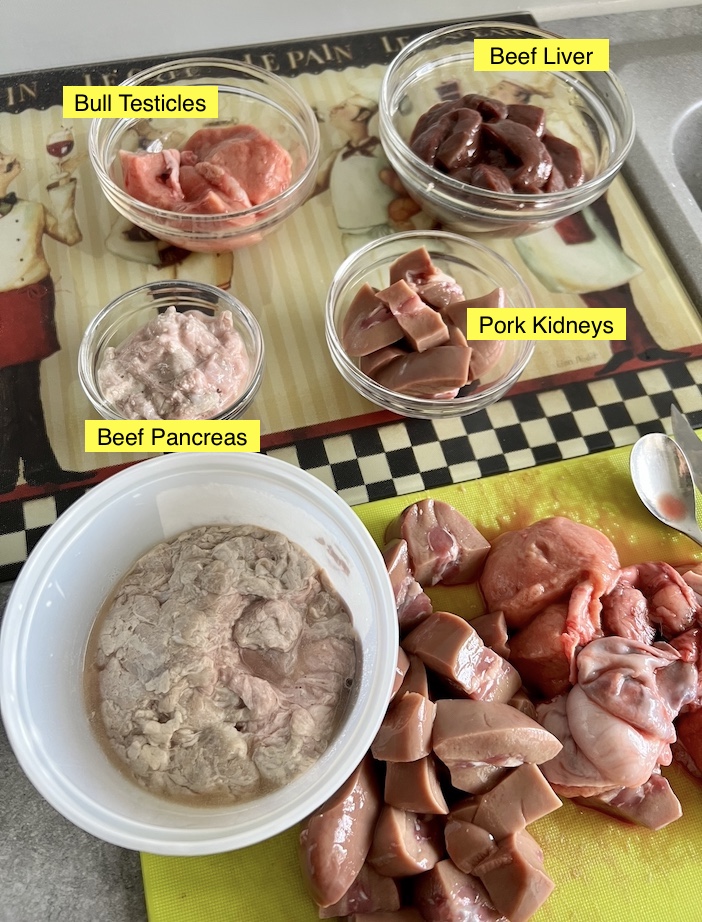
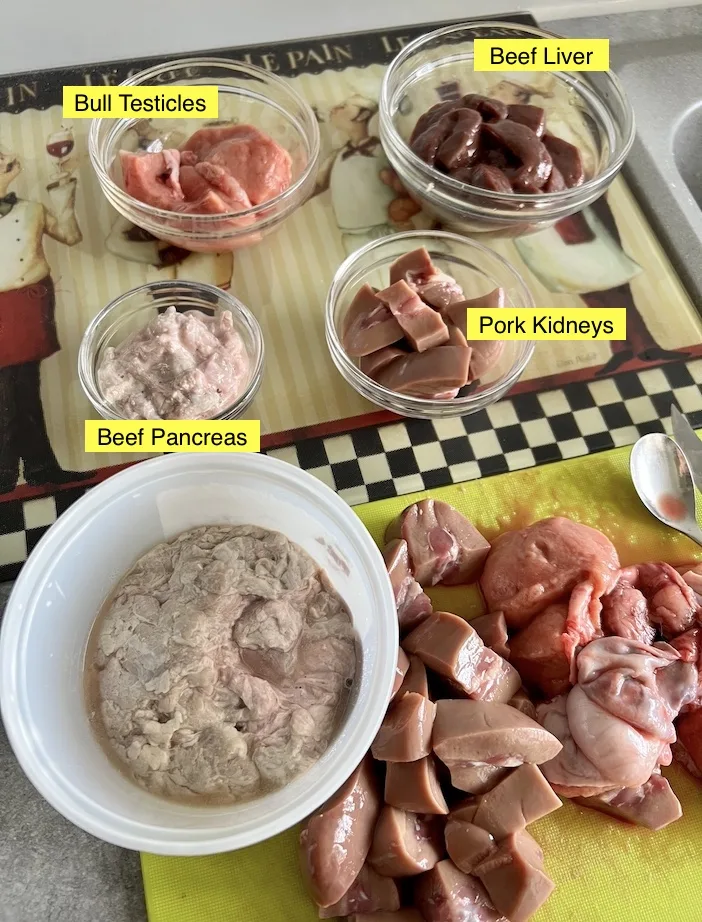
Canine organ meat hide – cooking ingredients
That’s a total of 16 oz = 1 lb. Remember, older dogs only need 10% of their daily allowance of raw dog food in this mix.
The animal you get the cuts of meat from doesn’t really matter because you have to rotate your dog’s protein sources either way.
So for example, you can switch between chicken liver, beef liver, rabbit liver and pork liver.
Rotate between beef kidneys, pork kidneys and rabbit kidneys.
Buy beef pancreas one month and pork pancreas the next.
Get any testicles you can find. That’s a little tricky to find and you’re usually limited to bull or goat testicles.
If you can also get your hands on duck and deer hides, do it.
You get the idea.
I have been using mostly beef (liver, testicles, pancreas) as the main source of protein for this set of organs other than the kidneys which are pork kidneys.
Once you’ve cut and measured your ingredients, combine them in your food processor and pulse.
Once you’ve made your organ meat mixture, you can use it right away for raw dog food or store it in a food storage container in the fridge for later.
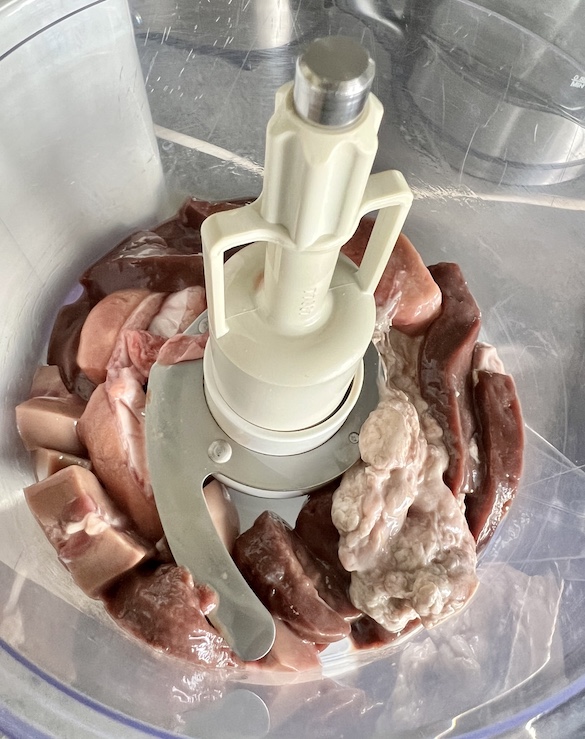
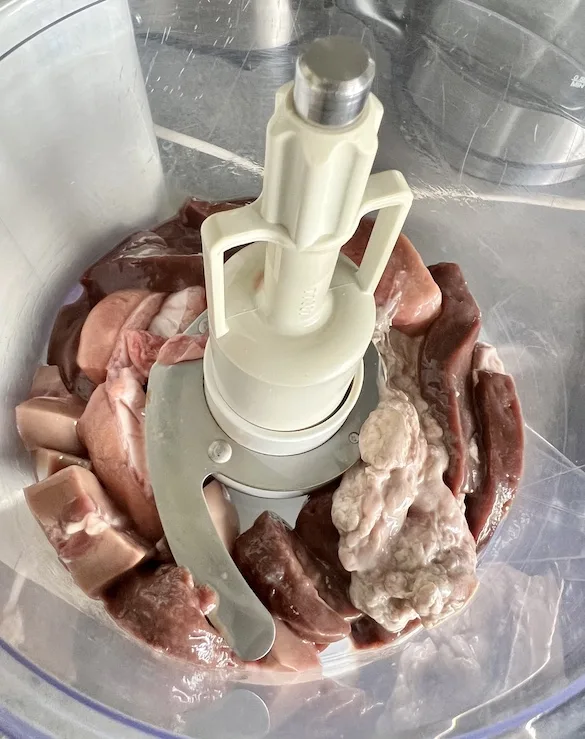
It is good for cleansing the flesh of the excretory organ
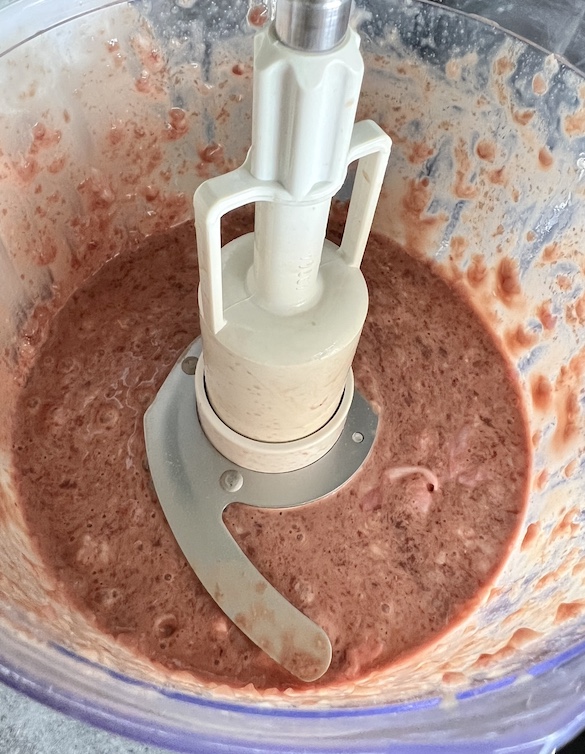
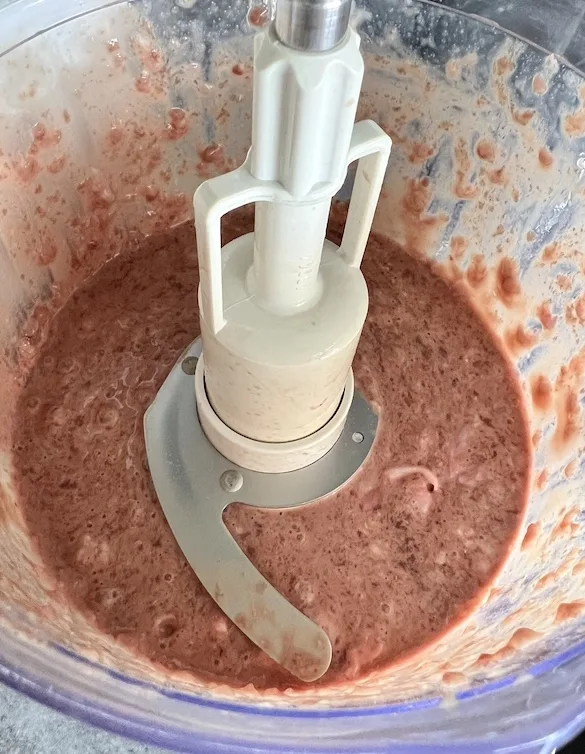
A combination of clean fresh organ meats
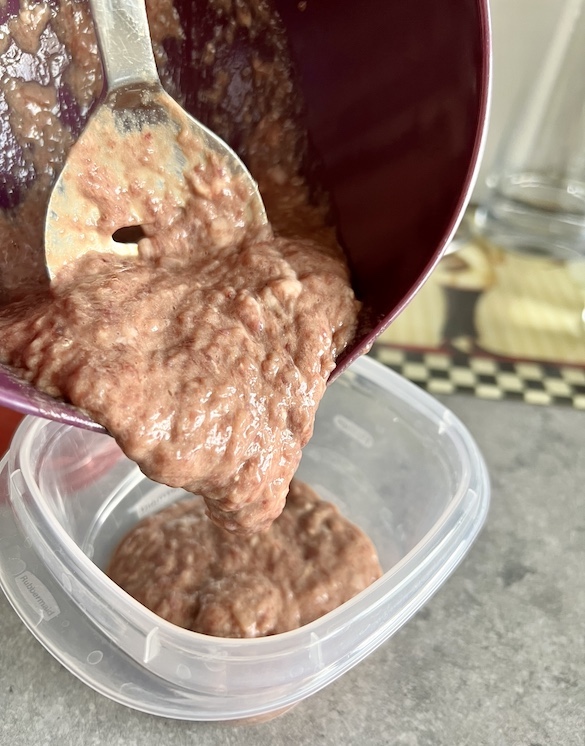

Transferring the organ meat mixture into a food storage container
Where To Buy Secret Dog Meat
I found beef liver and pork kidneys at a local grocery store, and bought beef pancreases and bull testicles from a raw dog food vendor.
Now, no matter where you are in the US, you should at least be able to find chicken livers at any local grocery store. In fact, many carry beef and calf liver.
With other cuts of organ meat like kidneys, pancreas and testicles, you probably won’t have much luck at the regular grocery store.
But ethnic food stores such as Asian supermarkets are known to carry those “weird” grains of meat, and grocers and farmers are often willing to part with them.
During deer hunting season, consider making friends with hunters and/or wildlife handlers to get your hands on some hidden gems.
Note: You will want to freeze any cuts of wild game meat for 3 weeks before feeding it to your dog. That ensures that any parasites that may be present are killed.
For more ideas on where to buy raw dog meat, check out our blog post here.
The Bottom Line
I hope you have fun making this secret organ meat recipe with many variations!
Remember, the secretory organs are the most nutritious animal parts.
They contain high levels of vitamins and minerals that are essential for the dog’s overall health and well-being.
That’s why it’s important to eat as many different cuts of organ meat as possible, and to rotate your protein sources.
That way, you’ll ensure that your dog’s raw food won’t have any nutritional holes.
On a raw diet, excluding organ meats makes up 10% of your dog’s daily raw allowance.
If you break it down, 5% should be the liver and 5% should be the other secretory organ.
For example, kidneys, spleen, pancreas, brain, eyes or reproductive organs.
So when you’re ready to stock up on your private parts to prepare raw food, you can get creative with your ingredients.
For more information on raw food and 10 raw dog food recipes, check out Lindsay’s raw dog food ebook here.
He is the co-founder of ThatMutt and a contributing partner.
If you have any questions about canine organ meat hides that weren’t covered in this blog post, please ask them in the comments section below!