
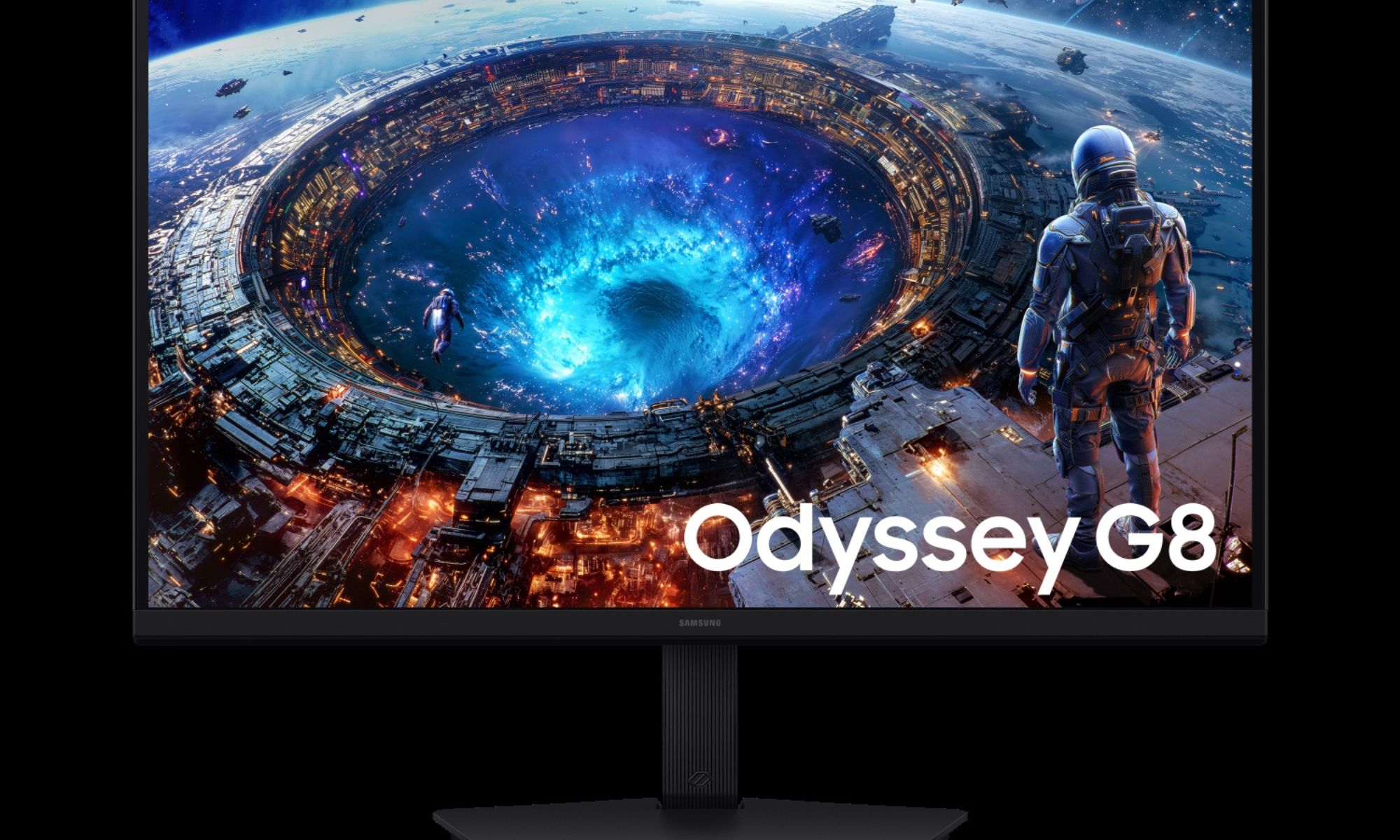
Okay, so Samsung dropped something wild this week. The Odyssey G8 G80HS is officially the world’s first 6K gaming monitor, and I’ve been sitting with the news long enough to have some solid opinions. Spoiler: amazing, expensive, and frustrating all at the same time.
6K resolution on a 32-inch panel feels almost unreal
Let’s start with what Samsung has built. The G80HS is a 32-inch IPS panel that pushes a resolution of 6144 × 3456 at 165 Hz. That’s six thousand horizontal pixels. In context, most people are still rocking the 1440p setup. 4K is still considered premium. And here’s Samsung skipping 5K altogether and planting the flag with 6K.
The pixel density stays at around 218 PPI—comparable to your phone’s screen. The text will look sharp. If you’ve ever peered at the edge of a pixel on a 4K 32-inch display and thought “I see you,” this monitor is the answer to that problem.
Dual mode is a very smart decision Samsung made here
The Dual Mode feature is smart, too. You can drop down to 3K resolution and hit 330 Hz— if you want to go full competition mode and chase frames, you have that option. It’s like having two monitors in one.
I like that Samsung lets users decide how they want to use the panel rather than locking them into one use case.
The IPS at $1,549 is where it starts to feel thin
But here’s where I start to get a little annoyed.
IPS. No mini-LED. For $1,549, I expect more from the backlight condition. IPS panels have come a long way, but if you’re spoiled by the deep contrasts from VA or the inky blacks of OLED, drop this kind of cash for a pair of edge-lit IPS panels.
The comparison scale will be what it is, and at this price point, Samsung had a real opportunity to pair that crazy resolution with a more efficient backlight solution. They choose not to, and I think that’s a mistake.
HDR that sounds better on paper than it looks in reality
It also makes me wonder about HDR performance. True HDR requires high peak brightness and strong local dimming—none of which a basic IPS backlight can pass.
If you’re buying this expecting an impressive HDR gaming experience to go along with that great resolution, you might walk away feeling a little underwhelmed.
Real GPU testing no one wants to hear
Now, the GPU question. There are almost no PCs that can push 6K at a competitive rate for a demanding title. Even with the rising technology, we are talking about a level of investment in hardware that goes far beyond the monitor itself.
6K mode at 165 Hz is great for productivity, content creation, and slow-motion games, but for fast-paced shooters or action RPGs where you need the frames? You will probably stay in Dual Mode at 3K/330 Hz. Good. That’s still a great experience. But it does mean that for many buyers, the headliner is more of a bragging rights than something you’ll use day in and day out.
Mac users, proceed with caution
And I’m talking about everyday use—if you’re on a Mac, I’d pump the brakes before ordering. macOS has historically had a difficult relationship with high-resolution external displays, especially at high refresh rates. The Apple Pro Display XDR is also a 6K display, and Apple is still struggling with its HiDPI options for some settings. Throwing a third-party 6K panel into that ecosystem will be fun.
This monitor actually makes sense
Here’s what I think the G80HS is good for: video editors who want to play 4K video at native resolution and still have room on the screen for their timeline and tools. Designers who want pixel-perfect clarity. Power users who just want the sharpest desktop experience possible and aren’t willing to pay for it. For those people, this monitor is probably close to the end game.
For gamers, it’s smart and not yet there
Especially for gamers? It’s very complicated.
The solution is flex. Dual Mode is useful. DisplayPort 2.1 is the right call for future proofing. AMD FreeSync and NVIDIA G-Sync compatibility means no one is left out. HDR10+ GAMING with real-time lighting and contrast is a great option.
But the lack of mini-LED and the increased price leave me feeling that this is version 1.0 of what a 6K gaming monitor should ultimately be.
Samsung built the first 6K gaming monitor—now it needs to finish the job

Samsung takes second place in the OLED gaming monitor market in 2025, and the OLED G8 models in this same list are exciting. In some ways, the star of the show—the 6K IPS panel—feels like it should have gone further.
I want to love this monitor unconditionally. I really do. The resolution milestone is real, the pixel density is amazing, and the Dual Mode switch is a genius piece of engineering. But $1,549 for an IPS panel without a mini-LED in 2026 is a tough sell when the rest of the market is moving toward better local dimming solutions.
Samsung has proven that 6K gaming monitors are possible. Now I want them to prove that one should exist—with a reasonable price and the backlight technology to back it up.
Related: CES 2026: Top 5 gaming monitors I liked, including glasses-free 3D
Grigor Baklajyan is a technical copywriter at . His contributions include product reviews, buying guides, how-to articles, and more.