
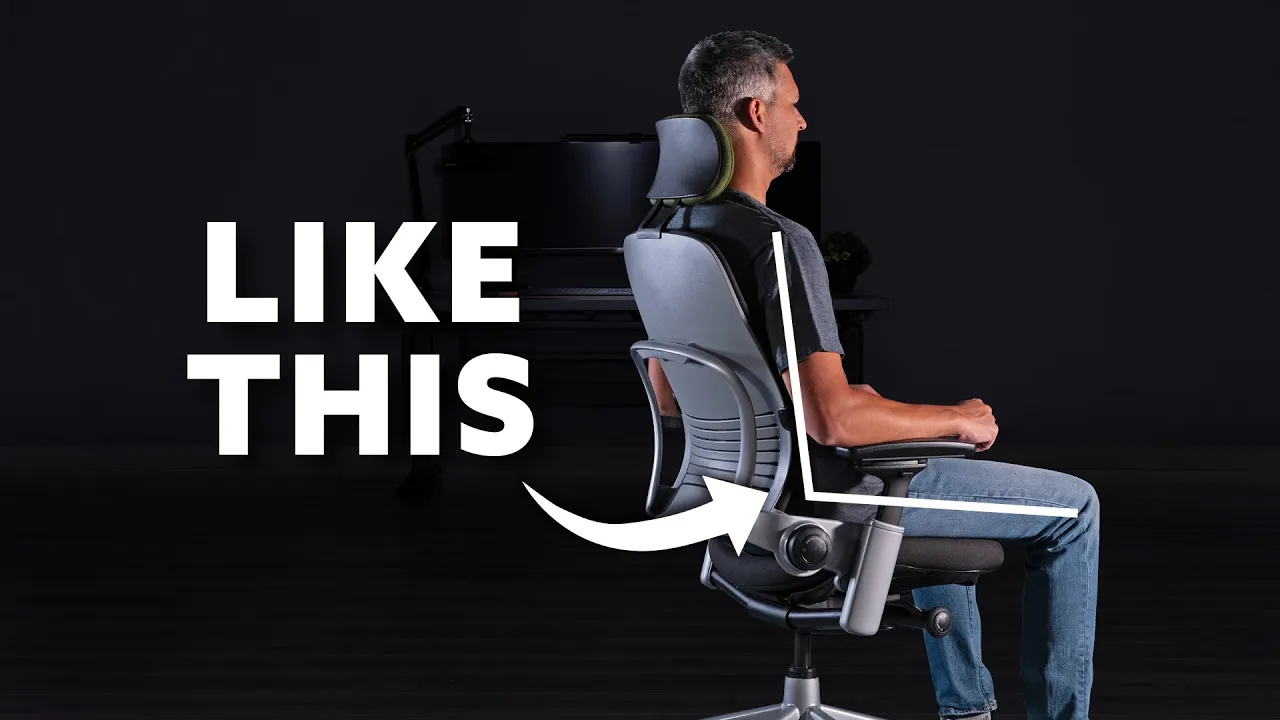
You probably never thought you would need an article and video on how to sit in a chair, but here we are. I’ve been in the same boat. I spent years sitting wrong in my ergonomic chair. I was spending 8 hours a day doing photo and video production. Big shock, I had back pain. Leaving that company and coming to BTOD, I started living on Ergohuman and was able to get comfortable right away.
The thing is, only half of the solution was an improved seat. The other part was teaching how to adjust my setup properly. My goal is to make you comfortable in your current chair. But if you get to the end of this and realize that your chair can’t do the things you need it to do, you can check out our best office chairs for long hours here.
These are my top 5 tips to keep you comfortable all day.
Full Disclaimer: We are an office furniture retailer and we sell some of the ergonomic chairs for back pain that we review. To learn more about the products we sell, our review process and why you can trust us, please visit: Why we’re different. Who is BTOD.com and Learning Center?
Tip 1: Get Everything at the Right Height
My first tip is the solution to most people’s back and neck pain, and that is getting everything at the right height. First, I will put my feet on the ground. I find most people have their seats set too high.
Start by sitting down and adjust the height of the chair until your feet are flat and your knees are at a 90 degree angle. If you are short and your feet do not reach the floor, consider getting a recliner, ideally one that can recline.

Next, let’s look at your arm length. You want your arms to be at about a 90 degree angle when resting on the armrests, meaning you can type without reaching up or down on your keyboard.
From there, your monitor should be at about eye level. If you have a laptop, I would definitely recommend investing in a laptop stand or, even better, a set of monitor arms.
Tip 2: Get the Right Support
The second tip is about getting the right support for the vital parts of your body. Let’s start with leg support. Seat depth adjustment is a feature that gives you customizable leg support. When you sit down, start by leaning your hips back in your chair so that your back is flat against the backrest.

If your seat is folding, adjust the depth of your seat so that you have a gap of two to three fingers between the front edge of the seat and the back of your legs.
There are many different styles of what this adjustment looks like, and a few seats like the Aeron have different seat sizes instead of having a seat depth adjustment.

There are a few rules when it comes to back support. It’s about preference and feeling. Full back support comes from both the lower lumbar and upper back.
The best ergonomic chairs for back support have an adjustable lumbar that you can position where your lower back needs it. I would never recommend adding pads to your chair, but if you’re completely stuck on something that doesn’t have lumbar support, there are pillow options that can help.
Please use this only as a temporary solution while you save for a better chair.

Arm support is more than just height, which we’ve already covered. Your arms should be straight against your sides to support your shoulders. If possible, adjust the arms of the chair to the correct width for your body.
Your arms should be able to drop naturally by your sides without needing to reach out to rest on the seat. You also don’t want to feel like you’re being squeezed too tightly between the arms.
The arm depth adjustment works to give you support whether you’re sitting up straight at your desk or sitting down. Arm pivot can ensure that your arms stay straight, avoiding any uncomfortable angles. You can adjust the length of your arm to make this possible. Even the cheapest chairs almost all have arm length adjustment.
Tip 3: Maintain Good Posture

Now let’s be honest, it’s doubtful that you’ll be sitting this well all day. The hardest thing for me is that I like to cross my legs or put one leg under the other. So, although you may end up falling into these old ways, slouching or crossing your legs, it’s important not to spend hours sitting like this.
I’m sure you’ve seen how you can set your phone or watch to remind you to stand up or move. So, if you feel like you need to be accountable for something, you can set a reminder to tell you to sit. Or the easiest way to do this, is simply to stick a post it somewhere on your monitor that says stay.
Tip 4: Keep Moving

Tip four continues the same theme to number three, and that is to keep moving. Even if you sit in that perfect position, it is not good to sit for long. It’s good to stop every hour, even if it’s just to stretch quickly and get your blood flowing.
If you want to keep moving while you work, a standing desk is a great investment. Even just standing up and putting your shoulders back to dissolve the tension makes a real difference. If you haven’t found the tension to go away, you may be in the wrong seat for your body type.
I had this happen to me with the Sihoo S300. No matter how I adjusted the seat, I found myself constantly stiffening my spine.
Tip 5: Make Sure Your Seat Fits Your Body

The fifth tip is about making sure you have the right seat for your body. You can sit down in any chair you have and measure how much space you fill.
For tall workers, you should check to see if the adjustment of the seat depth and backrest height is far enough to match your height.
Larger people should look at the seat and back width and the space between the armrests.
For small or short people, check exactly the height of the seat and the depth, as well as the same distance between the arms.

Having a chair that fits your body specifically is important. At BTOD, we have sizes for all our high chairs. If you’re on the short side, our best office chairs for short people guide includes the exact details you should look for.
Bonus Tip: Do You Need a Headrest?
Do you think you really need a headrest? In the words of VP Ryan of BTOD, why would I need a headrest? That’s my neck. Well, that’s an oversimplification, but somehow it’s true.
You shouldn’t really need one, but I understand that it helps a lot of people feel more comfortable in their chair, especially when sitting. For seats with headrests, make sure they can adjust to fit the curve of your neck.
Some headrest styles are more of a support for the back of your head and don’t offer much in terms of support. Your head should never feel like it is being pushed forward. If you find that headrests keep pushing your head forward, look for ones that adjust far behind the seat to avoid this. You can see how the top chairs rank in our ergonomic chair tier list.
The Bottom Line
If you get to the end of these tips and realize that your chair can’t do the things you need it to do, check out our office chair for an hour-long guide filled with all the most popular chairs. This can really help you narrow down which seats might be right for you.