
From RGB to Refined: Elevating Residential Gaming Desks
Imagine a home office that awakens your boundless creativity—a space where the morning sun hits a clean, small space, inviting you into a state of deep work. Then, as the sun sets, that same sanctuary transforms into a soft, amber glow, ready for many nights of high-level game. This is not a dream of two separate rooms; it is the reality of a refined, hybrid workplace designed to harmonize professional performance with sophisticated living space.
For many of us, “battle station” and “executive suite” now share the same photo square. The challenge isn’t just finding a desk that fits; it’s about creating a Sacred Workspace that honors the beauty of your home while fueling your competitive edge. By bridging the gap between aggressive sports features and refined interior design, we can create a day-to-day environment that improves both productivity and peace of mind.
The Science of the Sanctuary: Why Ergonomics is Non-Negotiable
Before we talk about aesthetics, we have to deal with the basics. A workstation that looks good but leaves you with a “burning sensation in the trapezius” (a common symptom of a keyboard positioned just one inch too high) is not a sanctuary—it’s dangerous. True empowerment in design begins with human-centered engineering.
According to BIFMA G1-2013 Ergonomics Guideline, furniture should accommodate 5 to 95 percent of people. This means that your desk doesn’t have to be just “ordinary”; it should be fixed. When we look at the ISO 9241-5:2024 standard for workplace design, there is an emphasis on postural flexibility. This is where functional gaming desks often outperform traditional “decorative” furniture. Designed for the heavy user, they provide the stability and range needed for long-term operations.
As highlighted in the 2026 Workstation White Paper: Converging Ergonomic Science and Sustainable Engineering, the combination of gaming rigor and ergonomic precision is the new hallmark of the modern home.
Model Note (Ergonomic Reach): Our analysis of workplace efficiency assumes a “Neutral Reach Zone” model. By keeping high-frequency peripherals within 10–15 inches of the body, we estimate a significant reduction in repetitive shoulder stiffness based on a standard musculoskeletal risk assessment.
| A feature | Standard Requirement (ISO/BIFMA) | Refined Gaming Desk Power |
|---|---|---|
| Weight Strength | Usually 200-250 lbs | Up to 500 lbs (eg, GIP 60″ series) |
| Depth of Face | At least 23.6 inches | 27–30 inches in concentrated depth |
| Stability | Slight vibration under load | Reinforced steel frames |
Space Transformation: From Chaos to Cohesive Design
The most common fear when bringing a gaming desk into the living room is “collision.” We envision jagged edges and neon lights pop against a neutral sofa. However, the right accessory acts as a canvas rather than a distraction.
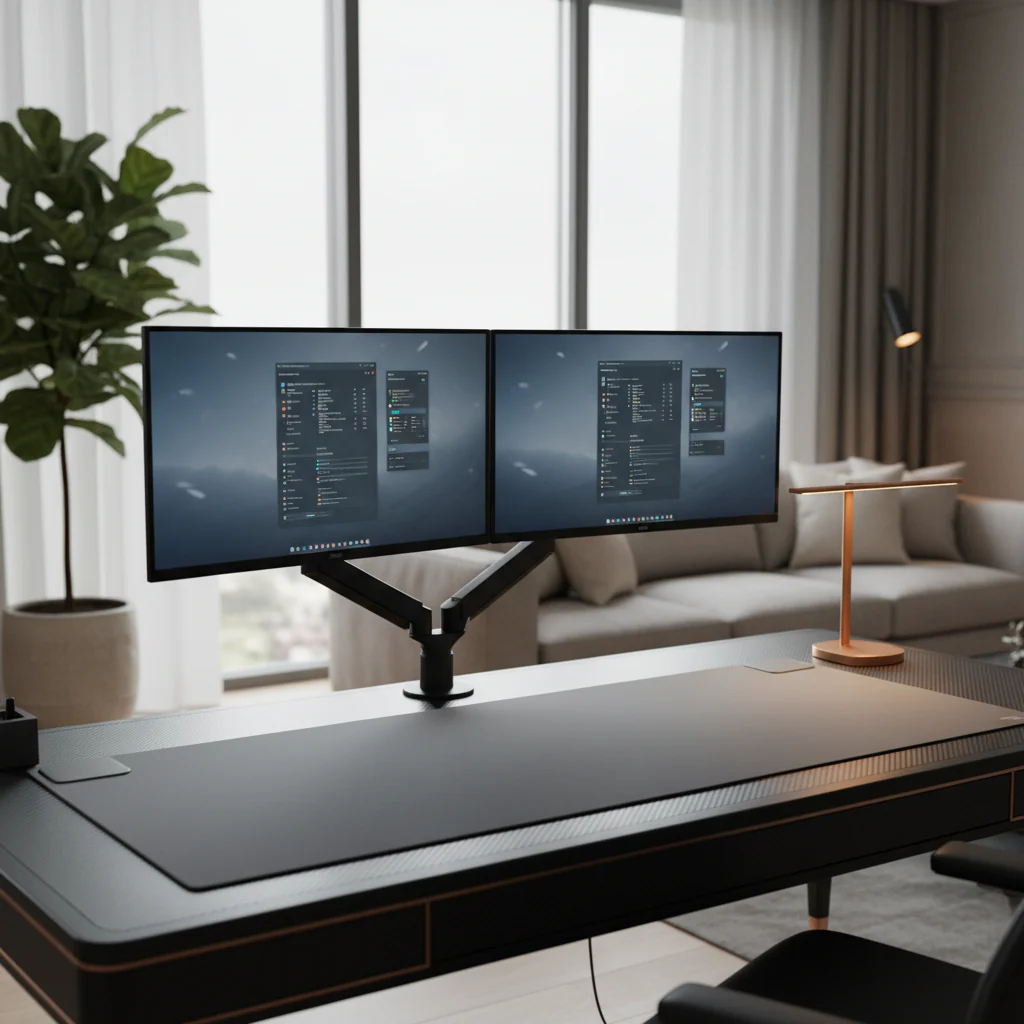
Consider the Full Space Mouse Gaming Desk (60″x27″). Although its name suggests a singular focus, its output is pure “Transformation.” The 60-inch width offers enough space for a professional dual-monitor setup, while the carbon fiber texture—often viewed as “aggressive”—actually mimics a high-end automotive or industrial design when paired with the right trim.
Research data suggests that carbon fiber surfaces with PVC laminated finishes can mimic the design of premium furniture, making them incredibly versatile in modern minimalist settings. By choosing an overstuffed mousepad in a deep charcoal or matte black, you create a cohesive visual plane that frames the room.
The Secret Built By L
Contrary to conventional wisdom that L-shaped desks are “large,” a well-fitting L-sized desk (60–70 inches) can actually improve existing spaces that waste rectangular desks. By tucking the “sports” side of the “L” into the corner and keeping the “professional” side open to the room, you create a defined space without dominating the living space. This allows you to match your desk to your home office style while maintaining high performance.
Linking Performance and Emotion: The RGB Evolution
Lighting the “Ambience” of your sanctuary. In the professional setting, we often see the mistake of using bright lights that cause glare on the monitor, leading to eye strain. According to the HSE guidelines for Display Screen Equipment (DSE), glare control and display are a key safety requirement.
In a hybrid space, RGB lighting shouldn’t just be “immersed.” It can be an effective tool for “Mindfulness” and “task performance.”
- Daytime Focus (Management Method): Set your RGB to neutral white or a soft 4000K “Daylight” tone at 50% brightness. This gives a clean, professional look to video calls and mimics natural light, which is important for maintaining circadian rhythms.
- Evening Rest (Sanctuary Mode): Reduce the brightness to 10-20% and change to a warm amber or deep forest blue. This reduces blue light and signals to your brain that it’s time to switch from “kill” to “joy.”
This hybrid approach ensures that you use the RGB desk in a professional home office without it feeling like a nightclub at 10 AM.
The Invisible Rig: Mastering Cable Management
Nothing detracts from the “Beauty” of the living room faster than a “spaghetti monster” of cables trailing behind from the desk. Refined living requires abstract technology.
Based on the patterns we see in high-end home office setups, the most successful mergers use the “Hidden Route” strategy. This includes using magnetic ties and trays under the desk to ensure that even if the desk moves or peripherals change, visual lines remain clean.
The Magnetic Cable Tie is a small tweak that makes a big impact. Unlike traditional Velcro, which attracts pet hair and dust—a common frustration in shared living spaces—magnetic ties allow for quick, clean repairs. Combined with a desk with built-in cable management holes, you can effectively hide the power requirements of a high-end PC while keeping the area clean.
Logical summary (50-Port Heuristic): The most efficient desks have multiple routing points (typically 50+ across the frame and more) that allow for “Discrete Management.” We recommend routing “Permanent” cables (power, monitors) to the frame and using magnetic ties for “Transient” cables (phone chargers, headsets) to maintain zero line of sight from the sofa.
Personal Tips: Ergonomic “Micro-Movements”
Workspace Sanctuary is about how you move and how you look. The World Health Organization (WHO) 2020 guidelines emphasize reducing sedentary time to reduce cardiovascular risks. However, simply “standing” is not enough; it’s about rhythm.
We recommend the Cornell University “20-8-2” Rhythm:
- 20 Minutes Stay: Use a neutral stance.
- 8 Minutes Standing: Change your weight regularly.
- 2 Minutes Walk: Stretch or walk.
To keep this rhythm going, your accessories should support your changes. The Dual Monitor Arm is important here. It allows you to adjust your screens to the right eye level regardless of whether you are sitting or standing, preventing neck tilt that leads to chronic stress. According to CCOHS guidelines for sit/stand desks, the monitor should be positioned so that the top of the screen is at eye level or slightly lower.
In addition, don’t neglect your feet. Adjustable Ergonomic Footrest with stitched surface helps promote circulation and reduce stress on your lower back while sitting. This is a key “office health essential” that bridges the gap between gaming setups and a health-focused workplace.
Designing for Longevity and Dependability
When choosing furniture for a shared living space, safety and durability are the ultimate criteria for “Approval.” Look for certificates that prove that the product is designed for the home environment.
- UL 962: Ensures the safety of height-adjustable desks, covering mechanical and electrical aspects.
- BIFMA Standards: The gold standard for durability; a desk that meets this is designed to last ten years, not just a season.
- FSC certificate: For those who prioritize sustainability, making sure your desk supplies are in the right place is an important part of a “sensible” home.
By choosing equipment that meets these strict standards, you’re not just buying a desk; you invest in furniture that respects the safety and air quality of your living room.
Creating Your Flow
The transition from “RGB to Refined” is a journey of purpose. It starts with an idea of how your day should feel. By combining highly functional tools like the Full-Surface Mousepad Gaming Desk (60″x27″) and the Dual Monitor Arm, you create a space that suits you, rather than forcing you to adapt to it.
Remember, an organized desk isn’t just beautiful—it helps reduce distractions and maintain focus, allowing you to get into that coveted “Deep Work” state faster. Whether you’re crunching spreadsheets or leveling up in your favorite game, your environment should be your best friend. Say goodbye to the chaos of “clashing” gear and hello to a truly home-based workspace.
YMYL Disclaimer: This article is for informational purposes only and does not constitute medical, legal, or ergonomic advice. Although ergonomic furniture can reduce the risk of musculoskeletal disorders, people with pre-existing conditions or chronic pain should consult a qualified physiotherapist or medical specialist before making major changes to their workplace setup.