
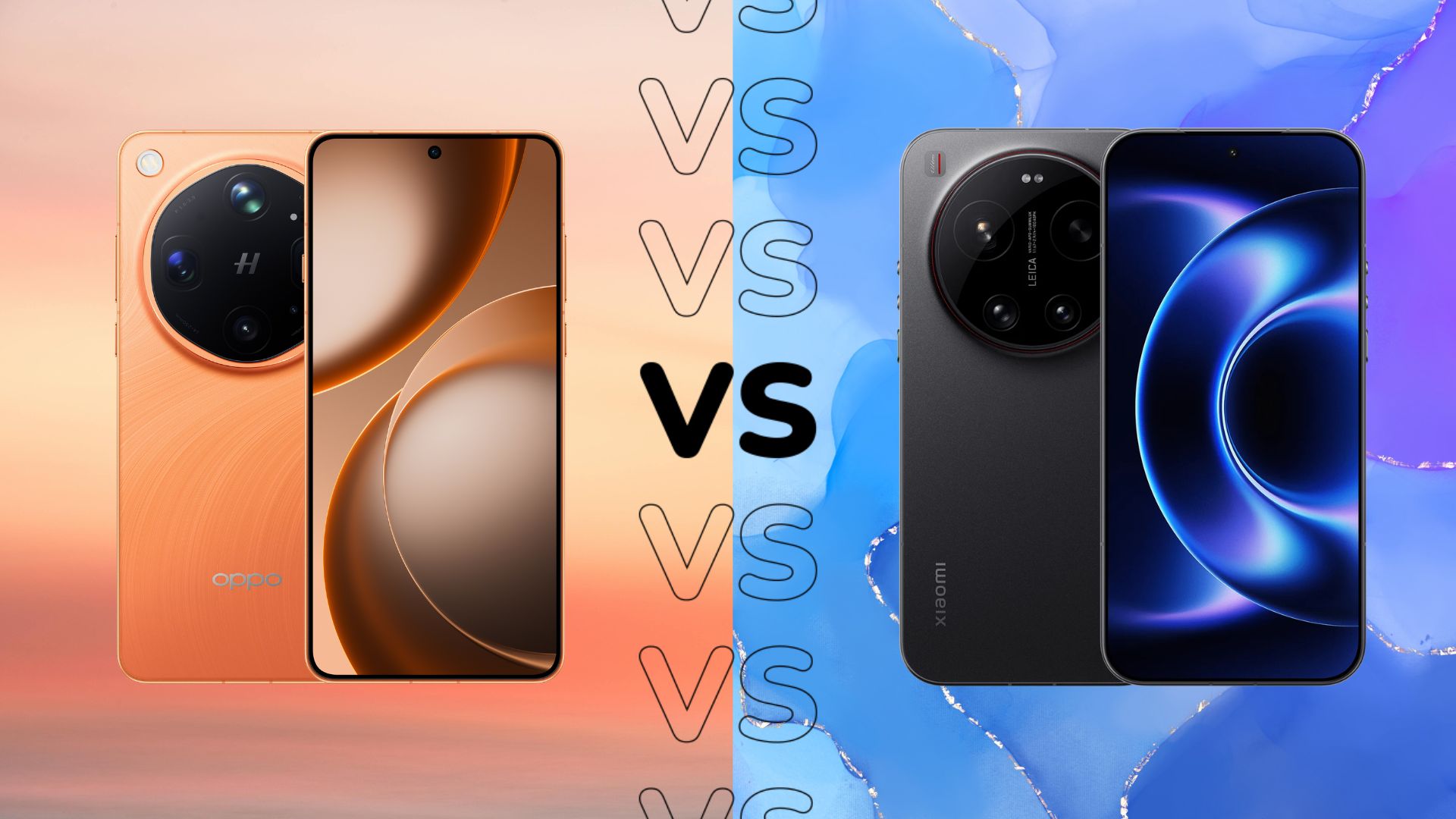
Not sure which flagship Android camera to go for? You have come to the right place.
We’ve compared the five-star Oppo Find X9 Ultra to the 4.5-star Xiaomi 17 Ultra to decide which camera-focused Android might be the best fit for you.
If not, our best camera phones and best Android phones should have you covered.
Price and Availability
The Xiaomi 17 Ultra is available to buy now, with a starting price of £1299 for the 16+256GB model.
Design
- The Oppo Find X9 Ultra is thicker and heavier than the Xiaomi 17 Ultra
- Xiaomi 17 Ultra comes with a wide variety of finishes
- The Oppo Find X9 Ultra includes a Quick Button and a Snap Key, while the Xiaomi 17 Ultra has no additional buttons.
Put the Oppo Find X9 Ultra and the Xiaomi 17 Ultra side by side and the difference is stark. At 9.1mm, the Find X9 Ultra is thicker compared to the 8.3mm Xiaomi 17 Ultra. The latter is also lighter, at 223g compared to 236g.
Flip the handsets face-to-face and you’ll see the difference between their camera bumpers. The X9 Ultra has a hexagonal shape inside a circular module placed in the center, while the 17 Ultra just sports a large circular hub.
Oppo Find X9 Ultra
Xiaomi 17 Ultra
Unlike the Find X9 Ultra, the 17 Ultra does not include any additional buttons other than volume and power controls. Instead, the Find X9 Ultra is equipped with a Quick Button to access the camera and a Snap Key shortcut.

The Find X9 Ultra is available in two finishes. There’s a Canyon Orange that’s less bright than the iPhone 17 Pro itself, and has a traditional glass-and-metal smartphone feel, alongside Tundra Umber with metal-and-vegan leather instead.
Finally, the 17 Ultra is available in a variety of finishes: Black, White or Green, with the latter sporting a matte finish. Alternatively you can choose the Leica edition which comes in black or white and has a vegan leather back panel.
Picking a winner here is tough, as both make phones that feel comfortable in the hand. However, since it’s light and thin, we’ll give the win here to the Xiaomi 17 Ultra.
Winner: Xiaomi 17 Ultra
The screen
- Xiaomi 17 Ultra has a large 6.9-inch display
- Oppo Find X9 Ultra has slightly higher contrast
- The Oppo Find X9 Ultra has the option to boost the 120Hz refresh rate up to 144Hz when gaming, while the Xiaomi 17 Ultra maxes out at 120Hz.
We must note that we were impressed with both the Oppo Find X9 Ultra and Xiaomi 17 Ultra displays. The former is slightly smaller, at 6.8 inches, and sports the same QHD+ resolution and 120Hz refresh rate powered by LTPO as the cheaper Oppo Find X9 Pro. Speaking of which, the Find X9 Ultra has the option to boost up to 144Hz for playback.
Oppo Find X9 Ultra
Xiaomi 17 Ultra
While the Xiaomi 17 Ultra only it reaches a refresh rate of 120Hz, it still offers a maximum brightness of 3500 nits and, unlike its predecessor, it now has a flat display.
Winner: Oppo Find X9 Ultra
Camera
- The Oppo Find X9 Ultra has a total of five rear lenses
- Discover the X9 Ultra’s True Color camera keeps white balance consistent with tones
- The Xiaomi 17 Ultra struggles with great shooting
While sometimes in smartphones, there is a lens or two that you don’t pay much attention to, or that you use in hyper-niche situations, all the rear sensors of the Find X9 Ultra are very bright. Of course, the main 200MP is the star here as, despite being a small sensor compared to the Xiaomi 17 Ultra’s own, it is able to capture a lot of light. In fact, images look rich and detailed, without looking overcrowded (we’re looking at you, Samsung.)

This is supported by a 200MP 3x lens which we bet you will end up using more than you would expect, as the quality is very impressive. Then there’s the 50MP, 10x periscope that does a great job of capturing textures from afar. Finally, the 50MP ultrawide is able to hold its own, even in difficult lighting conditions.
These sensors are bound by a fifth true color camera that maintains white balance and tones aligned throughout.
On the other hand, the Xiaomi 17 Ultra is equipped with three rear sensors, with one 200MP telephoto lens that can zoom between 3.2x and 4.3x. This is impressive technology, however we’re disappointed with its telemacro capabilities as a result, as the telephoto can’t focus as much as we’d like.

However, the star of the show is undoubtedly the 50MP main camera which produces good results in all lighting conditions without appearing overexposed.
Winner: Oppo Find X9 Ultra
Working
- Both run on Snapdragon 8 Elite Gen 5
- The Oppo Find X9 Pro scored slightly higher in our benchmark tests
- Both handsets can handle games and other intensive tasks intelligently
Unsurprisingly as the best Androids, both Oppo Find X9 Pro and Xiaomi 17 Ultra use Qualcomm’s high-end Snapdragon 8 Elite Gen 5 chip. With this in mind, you can ensure everything from scrolling to even playing to feel fast and responsive again.

Having said that, it’s worth noting that the Oppo Find X9 Pro outperformed the Xiaomi 17 Ultra in our benchmark test, as seen in the table below.
Still, we generally think it’s very unlikely that you won’t notice the difference between the chips in real-world use.
Winner: Oppo Find X9 Pro
The software
- Oppo’s OxygenOS is a joy to use
- Xiaomi’s HyperOS needs more time to get used to
- Both are packed with AI features
We really like Oppo’s OxygenOS software, as it is customizable, polished and easy to use. There are, of course, a sprinkling of AI features including AI Mind Space for storing screenshots and the like for easy export, as well as access to Google’s Gemini too.
In comparison, Xiaomi’s HyperOS requires more time to learn and adapt. It’s not overly sophisticated by any means, but it’s not as polished as the likes of OxygenOS or iOS – despite HyperOS being very similar to the latter.
Get the X9 Ultra
Xiaomi 17 Ultra
There are plenty of AI features too, including the ability to add AI-generated subtitles to whatever you’re watching on your phone.
Winner: Oppo Find X9 Pro
Battery
- The Oppo Find X9 Ultra has a bigger battery than the Xiaomi 17 Ultra’s
- Oppo Find X9 Ultra is easily a two-day device
- Both support 50W wireless charging, but the Oppo Find X9 Ultra supports a faster wired speed of 100W
At 7050mAh, the Oppo Find X9 Ultra may not have as big a battery as the Find X9 Pro, but it’s still easily a two-day device. We found on less demanding days we’ll get through the days with up to 70% battery left in the tank – although this will vary depending on your usage.
When it’s time to recharge, 100W and 50W wireless support should help you see healthy improvements quickly. Just remember that you will need to purchase compatible chargers separately.

Otherwise, the Xiaomi 17 Ultra has a 6000mAh cell that we found could see us through a day without worry. However, we used to finish the day at around 30% which means it’s not a two-day device.
Although it also supports a wireless charging speed of 50W, it is slower than the wired speed of the Find X9 Ultra at 100W.
Winner: Oppo Find X9 Ultra
The decision
With the Snapdragon 8 Elite Gen 5 under its belt, an excellent camera setup and a powerful battery, there’s a lot to like about the Oppo Find X9 Ultra. If you want one of the best camera phones but don’t want to compromise on the general use of smartphones, then the Oppo Find X9 Ultra is a good choice.
Having said that, the Xiaomi 17 Ultra is still a solid alternative. However, it lets itself down with great photography, while its HyperOS software isn’t as polished as Oppo’s alternative.