

If you’ve ever stared at a product’s “eco-friendly” badge and wondered if it meant anything, I understand. The sustainable technology space is full of noise – buzzwords, carbon offsets buried in fine print, and green products in name only. But if you really care about what your gadgets are made of, how long they last, and what happens to them when you’re done – I’ve written this guide to the best sustainable tech gadgets for you.
If you’re like me, you don’t shop for low prices or cheap specs. You buy with one more question in mind: what is the real cost of owning this thing? That means thinking about materials, maintainability, energy consumption, and end-of-life recycling. The good news? In 2026, there are truly sustainable options that don’t compromise performance.
What Sustainable Electronics Will Really Mean in 2026 (Besides Packaging)
As a tech editor, I’ll be the first to tell you that mainstream sustainability marketing tends to highlight recycled cardboard boxes and obscure carbon offset programs. But if you really want to buy carefully, here’s what moves the needle – and it’s not the packaging.
And just a side note: The world generated a record 62 million tons of e-waste in 2022—less than a quarter of it was properly recycled, according to the UN’s Global E-waste Monitor 2024. That number is on track to reach 82 million tons by 2030.
As a consumer, there are real choices you can make to reduce your waste at home. Here are four important things:
1. Durability and adjustability: A device you keep for 7 years is more sustainable than one that ends up in the landfill after 2. Look for replaceable batteries, modular components, and longer windows that support software.
2. Finding material— What are the important things? Recycled aluminum, FSC-certified wood, bamboo, and recycled metals all reduce upstream damage. Post-consumer recycled plastic is a real difference—not a nice thing to have.
3. Energy efficiency in daily use– Production costs are sunk. That adds up over time to how much electricity your gadget draws every single day, every year.
4. Transparent product practices– Companies that publish impact reports, third-party certifications (Energy Star, ISO 14001), and maintenance guidelines do real work. Vague “green” claims without verification do not exist.
What this is not the case it’s as important as the products want you to think: whether the box is a nice shade of kraft brown, or whether the product comes with a hemp-printed sleeve. Those are the optics. The effect remains on the device itself.
Sustainable Tech Buys Worth Your Money This Earth Day

TESSAN Voyager 205 8-in-1 Universal Travel Adapter
This is my go-to for everything—laptop, phone, tablet, headphones…you get the idea. Instead of bringing a separate charger for each device, I just pack this, and suddenly all of my setup is from one compact hub. From a sustainability angle, this is the height of “buy less, spend wisely.” It replaces many water-consuming chargers with a single GaN unit that efficiently distributes power to all devices. That means less wasted energy, fewer materials, and less clutter in the bottom of my bag.
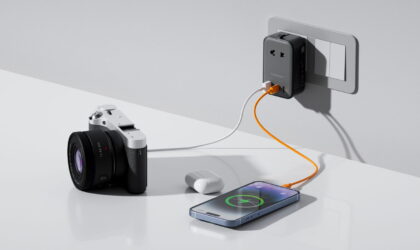
TESSAN Ultra Thin Universal Travel Adapter PD 20W
This is one of those “I wish I bought this sooner” moments. Instead of packing multiple adapters and chargers (which I always overdo), I just throw this one in my bag and call it a day. From a sustainability perspective, this is about integration. A single adapter replaces multiple plugs, which means less waste in the long run—and less stuff to lose in random hotel rooms. I can use it to charge my phone, Apple Watch, and Kindle all at once while on the go, which is a lifesaver when outlets are limited (I’m looking at you, airport lounges).

TESSAN PD 65W USB-C CS07 charging station
I wasn’t expecting a charger to make my desk feel nice and stable, but here we are. The TESSAN CS07 basically replaces a bunch of chaotic chargers that I used to lug around every day. Instead of plugging in separate bricks for my laptop, phone, and earbuds, I just use this one compact hub—and that alone sounds like a small win for reducing waste. 65W GaN charging is faster but also more energy efficient than older chargers, so I’m not just saving space—I’m using less power in the long run. I keep it on my desk while I work, charging my laptop and phone at the same time, and the changing cat face is weirdly motivating (like…why does it make me want to be more productive?).

EcoFlow OCEAN Pro Solar Battery System
This is one of those “okay, this actually changes things” kind of products. EcoFlow OCEAN Pro is a real transition to energy independence. Instead of relying on the grid 24/7, I can store solar power and use it when I really need it, which sounds like a big step toward reducing my footprint. What I love most is how much it grows. You can start with 10 kWh and build up to 80 kWh, so it grows with your life instead of expiring. On a typical day, I would use it to store solar energy during intense sunlight and power my home at night—grid dependency, low cost, and overall smart energy use.

Rivian AND TM-B Electric Bike
This sounds like a “one bike for many replacements” type of investment. The Rivian AND TM-B isn’t just for commuting—you can swap it out for errands, school drop-offs, or weekend rides. I like the modular approach. One day a person is traveling alone, the next he is transporting groceries or even children. That flexibility makes it a more sustainable option in the long run because you’re not buying as many specialized bikes (or replacing your car instead). It is currently available for pre-order.

GOTRAX G4 Electric Scooter
This is one of the easiest ways I’ve found to cut short car trips. Instead of driving for coffee or running errands, I just take the G4—and suddenly I’m using zero gas and a lot less energy. It’s fast enough (up to 20 mph) to feel real, and the 25-mile range means I’m not constantly charging. I use it for quick local trips, and it honestly makes those everyday activities a lot more fun. The folding design is a win for living in a small space, and I love that I can replace multiple short drives with one electric drive.

FLAUS Electric Flosser Kit
I never thought I could describe blacksmithing as “low trash,” but this completely changed the way I think about it. The FLAUS Electric Flosser reduces plastic waste significantly compared to conventional floss picks—like, up to 95% less—and the refill heads are reusable, which feels like a small but meaningful change in my daily routine. And just…an easy way to stick to it. I can brush my entire mouth in less than a minute (no exaggeration), so I actually do it regularly now. I usually use it at night when I’m too tired to deal with regular floss, and the sonic vibration does the job for me.

Fairbuds True Wireless Earbuds
These sound like durable earbuds, and I’m obsessed with them. Instead of replacing the entire set when something breaks (which we’ve all done), the Fairbuds are interchangeable and repairable. You can replace parts such as batteries or shells, which greatly reduce e-waste. Day in and day out, they still feel like premium earbuds. The sound is very balanced, the ANC works well for commuting, and I can go all day without worrying about battery life. I often use them when I’m working at home and then I take them out to do something or go for a walk—there’s no need to keep charging.
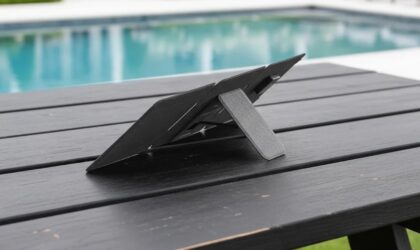
Preppi Solar Laptop & Phone Charger
This is the kind of gadget that makes you feel weirdly self-sufficient—in a good way. The Preppi solar charger allows me to power my devices using real sunlight, which means less reliance on outlets and grid electricity, especially when I’m outdoors or traveling. I’ve used it on park days with my kids and during trips when outlets are limited, and it’s a clutch that keeps my phone alive (even with a tablet on top). The foldable design makes it easy to throw in my bag, and it’s surprisingly sturdy—I don’t have to be a kid.
Chasing “green” accessories for non-green devices.A bamboo phone case on a phone that you replace every 18 months is a complete mistake. The device itself is where the impact lives – materials, manufacturing, and how long it lasts.
Trusting carbon offset claims without reading them. Most brands purchase offsets that only cover shipping, not manufacturing. Ask what percentage of the product’s actual life cycle is in question — and look for Gold Standard-certified projects, not standard offset credits.
Excessive indexing of packets. Recycled cardboard is fine. It’s also the cheapest sustainability upgrade a product can make. Don’t let it take the place of hard questions about what’s inside the box.
New purchases where guaranteed renewals are available. The UN’s e-waste data makes the story clear: the most sustainable device is often the one that already exists. A professionally refurbished laptop or phone carries a new carbon footprint – and if it’s certified, the performance difference is minimal.
Where to Start If You Want to Buy Ethical Tech in 2026
If 2026 is the year you decide to buy tech gadgets, I recommend taking stock of the devices and products you use every day—and look for modular, long-lasting, or energy-efficient solutions. There is no sense in having a separate charger for every device when one cannot use them all.
Similarly, if you make a quick trip to your local grocery store every day, going there on an electric scooter or E-Bike is more sustainable than firing up your (non-electric) car every time.
Small changes can make a big difference, and eco-conscious options really do exist!
Lauren has been writing and editing since 2008. She loves working with text and helping writers find their voice. When she is not typing on her computer, she is cooking and traveling with her husband and two children.